One Object, Three Short Forms
One object, three short forms: learn how a list, a brief scene and a fragment reveal different angles, then choose the form that suits your material.
A key catches against the lining of a coat pocket; you pull it free and cannot remember which door it opens. That small uncertainty is enough to begin writing. One object, three short forms—a list, a brief scene or a fragment—can turn the same detail towards different meanings without requiring a bigger plot.
The object gives the reader something solid to hold while the form decides what to notice. A list separates details, a scene puts them in motion, and a fragment leaves space around them. Choose according to the pressure in the material: what you want the reader to see, hear or wonder about.
Let the form decide what the object can reveal
Start with an object that has texture, use or a trace of human handling: a chipped mug, a bus ticket softened at the fold, a glove with one damp fingertip. It need not be rare or important. In short writing, an ordinary object works well because its visible qualities can carry a thought without announcing one.
Before choosing a form, write down a few observations without explaining them. Note what the object looks like now, what someone does with it, and what you do not know. “The clasp is bent” is an observation; “it belonged to a lonely person” is a conclusion. Keep the first and earn the second, if the piece needs it.
Then ask what kind of movement the material suggests. Are several details pressing for attention? Is there one small event with a before and after? Or does the object appear in a sharp, incomplete glimpse? The answer points towards a list, a scene or a fragment.
A list makes separate details gather into a pattern
A list lets each line hold its own angle. The object might be described through what it does, what it has touched, what someone calls it, or what is missing from it. Because the lines do not need to form a continuous event, a list can move between present observation and remembered use without forcing a transition.
Its shape matters. A list of physical features may start as inventory, but a change in the kind of detail can create a turn: from the object’s surface to the person who handles it, then to the unanswered question it leaves. You can place the most charged line at the end, or let an early line alter how later ones read.
To keep the form from feeling like notes, make each entry contribute something new. Change the scale, sense or relationship rather than restating the same impression. A scratched lid, a faint smell of soap and a habit of turning the handle towards the wall are different kinds of evidence.
A list suits a writer who has vivid details but no clear event, or who wants to let contradictions sit beside each other. It also suits material that should remain open: the reader can connect the entries without being told what they must mean.
A brief scene gives the object an action and a consequence
A scene places the object in a particular moment. Someone reaches for it, hides it, drops it or chooses not to hand it over. The action gives the details a direction, while the object can shape what the people in the scene say or avoid saying.
Keep the scene narrow. Establish where the object is, who is present, and what changes during the moment. A ticket can move from one hand to another; a button can be picked from a carpet while a conversation continues. The event does not need to be dramatic. It needs a discernible shift in attention, action or understanding.
Dialogue can help, but it should have a reason to be there. Let a voice reveal a practical disagreement or an effort to avoid a subject, rather than using speech to explain the object’s symbolism. A pause, a correction or a refusal to answer may carry more than a speech about what the object means.
A brief scene suits material with a clear encounter and a meaningful change. Choose it if the object alters what someone does, or if two people respond to it differently. If the only useful material is a collection of observations, a scene may force you to invent unnecessary action.
A fragment preserves the moment before it becomes a story
A fragment offers a partial view: an image, a sentence, a sound or a thought that stops before everything is explained. The object may appear only once, but its exact placement can keep the piece coherent. A white thread on a black sleeve, for instance, can make the whole moment feel particular without opening a full scene.
Fragments are not unfinished scenes by default. Their omissions should feel chosen. You might leave out who owns the object, how it arrived, or what happened next, while making the immediate detail precise enough for the reader to stay with it.
Use a fragment when the material arrives as a flash rather than a sequence, or when explanation would flatten its uncertainty. It is especially useful for a voice that thinks in images or for a moment whose force depends on not being resolved. If readers need to know who acted and what changed, give them a scene instead.
Compare the three forms before you commit
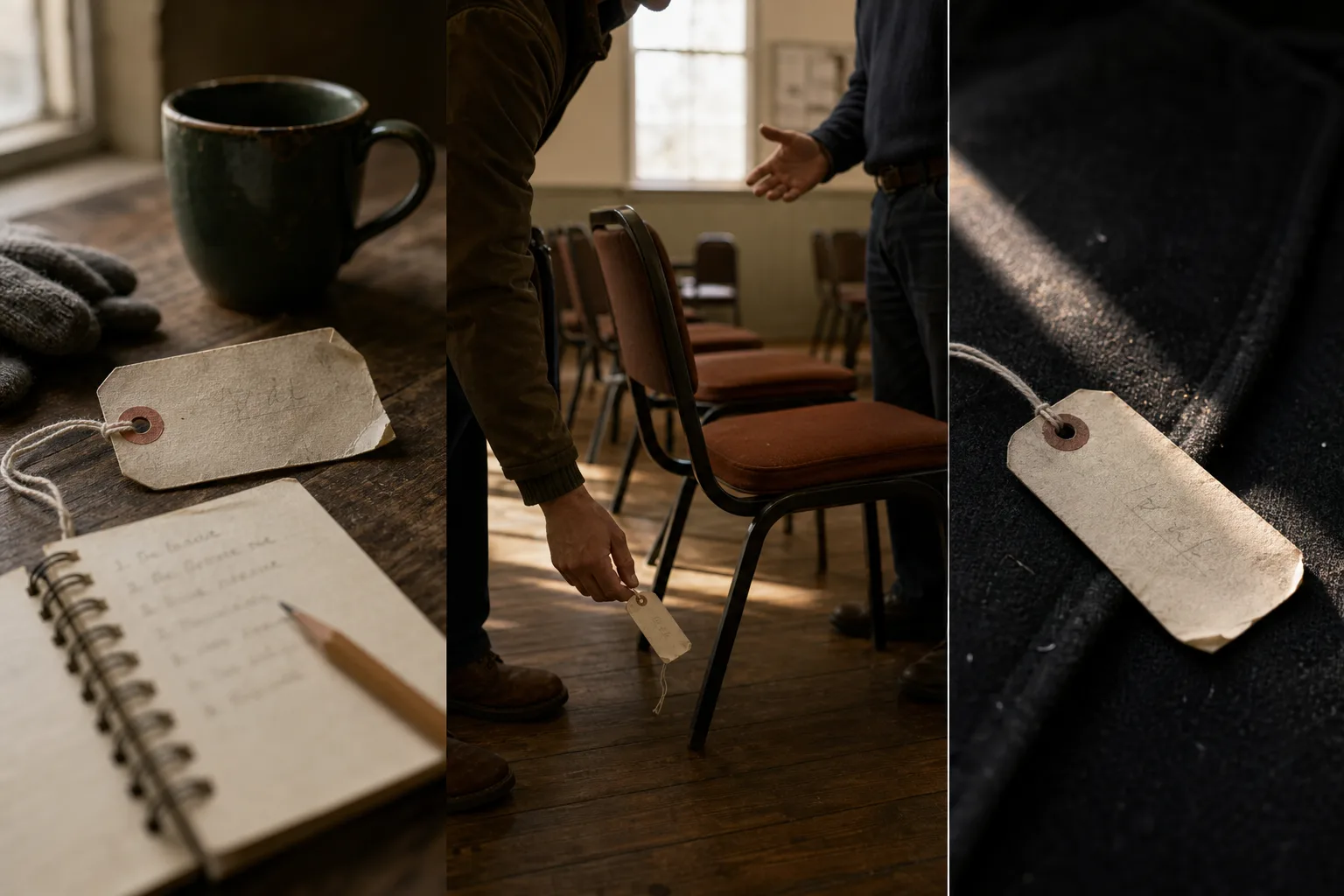
Imagine you find a paper label caught beneath a chair at a community hall. You notice the pencil mark on its back, remember someone folding it into a pocket, and realise you cannot identify the handwriting. The starting point is the same, but each form gives that material a different job.
- As a list: record the label’s curled corner, the pencil mark, the dusty floor beneath the chair and the name you cannot make out. The details can build a pattern around what remains unknown.
- As a brief scene: show someone retrieving the label while another person asks whether the hall is ready to close. The search for the owner can become a small action with a social consequence.
- As a fragment: stay with the graphite on the paper and the uncertain name. The piece can stop there, holding the instant of almost recognising someone.
These are invented possibilities, not facts about a particular hall or label. Notice how the choice changes the reader’s task: a list asks them to connect evidence, a scene lets them watch an event unfold, and a fragment asks them to remain with an image or gap.
How should you choose a short form?
When does a list work better than a scene?
Choose a list when the object offers several distinct details but no single action carries the piece. Choose a scene when a person’s action changes the situation and the reader needs to witness that change in sequence.
How long should a brief scene be?
Stop when the scene has established its place, made the object matter to an action and reached a small shift. If another event is needed to explain the first one, consider whether the piece is still short-form or whether its centre lies elsewhere.
Can a fragment include a backstory?
Yes, but keep the backstory partial and purposeful. A short glimpse of how the object was handled can deepen the present image; a full account may turn the fragment into a compressed scene.
How do you know which form suits the object?
Draft the same material in a few lines as a list, then as a moment of action, then as a single image. Choose the version that feels most precise and least dependent on explanation, rather than the one that sounds most polished on its first pass.
Revise for the form you have chosen
Once you have a draft, check whether every detail is doing the work of that form. A list needs distinction between its entries; a scene needs an action readers can follow; a fragment needs a precise image or thought strong enough to hold the pause.
Try this revision pass:
- Keep the object tangible. Replace a broad label such as “old” with a visible mark, worn edge or altered surface.
- Remove repeated evidence. If two lines or sentences tell the reader the same thing, keep the sharper one.
- Check the order. In a list, arrange details to create a shift. In a scene, make the action easy to follow. In a fragment, place the strongest image where it can resonate.
- Cut explanation that arrives too early. Let a gesture or detail carry meaning before you name an interpretation.
- Read for the ending. End a list on a detail that changes the pattern, a scene on the moment of change, or a fragment where its chosen silence feels complete.
These checks are decisions, not rules that every piece must obey. If a repeated detail creates rhythm, retain it; if a scene needs a little context, give the reader enough to follow the action.
Choose the form that leaves the right space
One object, three short forms is not a formula for making three versions equally strong. It is a way to discover what the material can bear. The list opens several paths, the scene commits to a moment, and the fragment protects a gap.
When you are unsure, write the smallest version first. Put down the object’s clearest detail, then notice whether the next sentence wants another separate observation, an action or a pause. That next move is often a more useful guide than an abstract idea of what the piece ought to be.
For one object, choose the form that gives the reader the right amount of company: enough detail to see it, enough movement to follow it, or enough silence to keep looking.