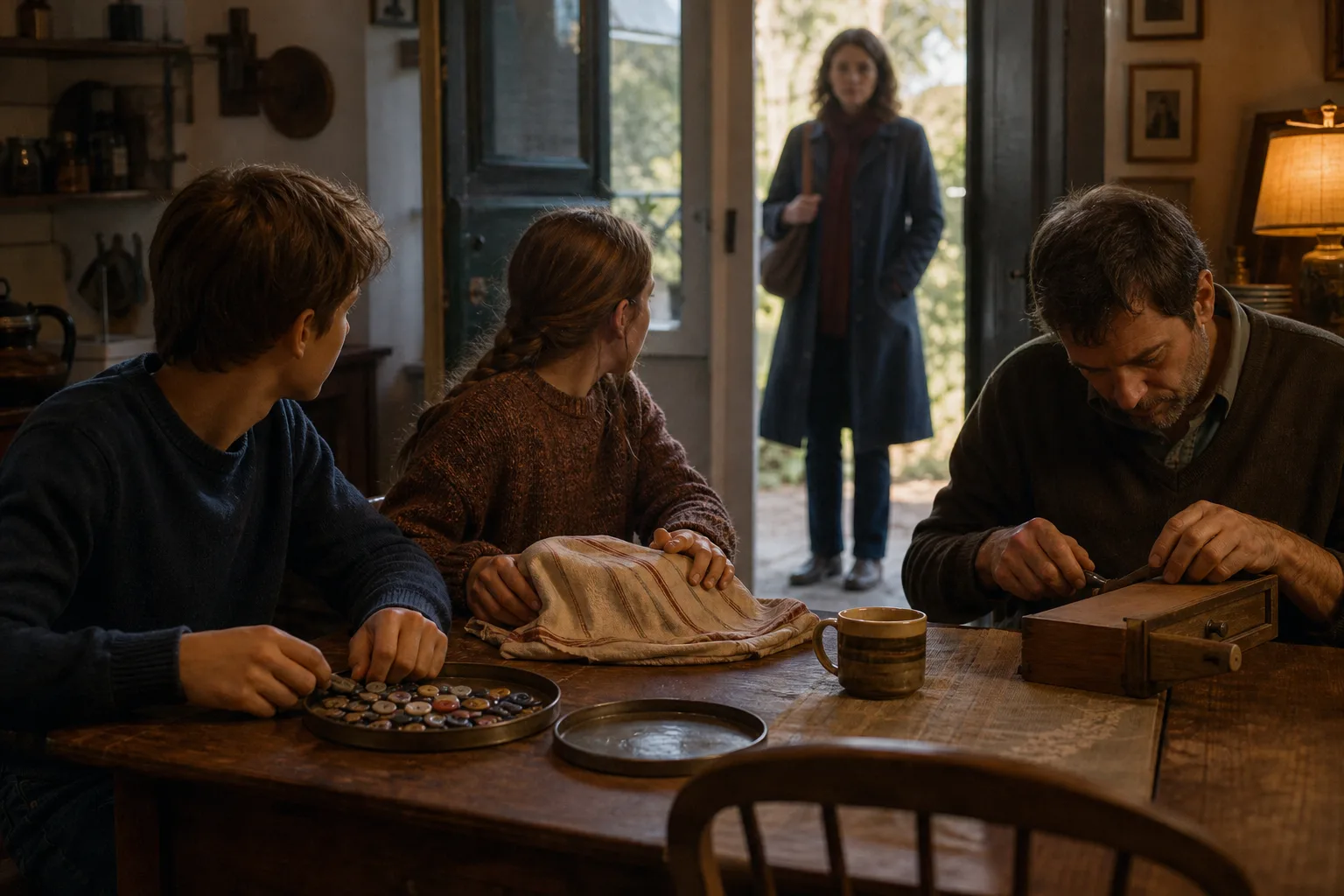
Finding a Voice in Sentence Rhythm
Finding a voice in sentence rhythm starts with the moment you want to tell. Choose sentence lengths and words that shape its pace, mood and point of view.

Finding a voice in sentence rhythm begins with a simple moment: a kettle clicks off, and someone stays in the kitchen instead of leaving. One writer might make that pause feel comic; another might make it uneasy. The event barely changes. Sentence length and word choice make the difference.
If a passage sounds flat, you do not necessarily need a more dramatic event or a more elaborate vocabulary. Decide what the narrator notices, how quickly the moment should move, and what attitude the words carry. Then choose a rhythm that supports those decisions.
Start with the effect you want the moment to have
Before revising individual sentences, name the moment’s main effect in plain language: hurried, awkward, tender, guarded, amused. This is not a label to insert into the prose. It is a private guide for choosing pace and diction.
Take the kitchen pause. If it should feel rushed, compress the action and let the reader catch up. If it should feel strained, slow the account where the character avoids an answer. If it should feel funny, give the narrator room to notice the small absurdity.
A useful test is to write the same event in a neutral sentence, then ask what should change in the reader’s experience. Keep the event fixed while adjusting the narrator’s attention and timing; that makes it easier to hear what the rhythm is doing.
Choose clipped sentences when the narrator is under pressure
Short sentences can make a voice sound decisive, anxious, blunt or alert. Their effect depends on the words and the surrounding context. A string of fragments may create a pulse of urgency, but it can also sound mannered if every sentence lands with the same force.
Use clipped rhythm when the narrator is reacting faster than they can interpret, refusing to dwell, or sorting immediate details. Concrete verbs help: “The kettle clicked. Mara shut the tap. Nobody spoke.” The actions arrive one by one, with little room for reflection.
For a restrained voice, make the short sentences plain rather than theatrical. “He read the note. He folded it. He put it away.” The repetition can suggest control because the narrator reports actions without explaining what they mean.
Choose this rhythm if the scene needs pressure or reserve. If the reader should linger over a thought, give that thought a longer sentence instead of chopping every beat into pieces.
Choose longer sentences when the narrator is thinking through a moment
A longer sentence can follow a mind as it connects details, revises an impression or circles around something it would rather not say. It does not automatically sound reflective. If it carries too many actions or qualifications, the reader may lose the thread.
Give the sentence a clear centre: one action, perception or thought. Then let its clauses show how the narrator moves around that centre. For example, the kettle clicks off while the narrator notices that nobody has reached for a cup, and remembers that the usual conversation has not started.
Longer syntax suits a voice that qualifies itself: “I thought she was waiting for me to speak, though perhaps she was only listening for the rain to stop.” The correction reveals a narrator uncertain about how to read the silence. A blunt version would make a different character of the speaker.
Use a longer sentence when the reader should experience a thought unfolding. Break it where the focus shifts, not merely because it has grown long.
Let word choice reveal what this narrator notices
Rhythm sets the pace, but diction tells the reader what kind of attention is guiding the prose. Two narrators can describe the same sound as a “click”, a “snap” or a “little announcement”. Each choice carries a different attitude without changing the event.
Prefer words that belong to the narrator’s way of seeing. A practical person may notice the switch, the heat and the waiting tea. A playful person may treat the kettle as if it has interrupted a conversation. A guarded person may name the sound and leave the silence unexplained.
Be cautious with decorative adjectives. “A lonely, exhausted kitchen” tells the reader what to feel, while a dry mug beside an untouched spoon gives the narrator something specific to register. The second approach can still be lyrical, but its image grows out of attention rather than a mood pasted onto the room.
Try changing the verbs before adding description. “Mara crossed the kitchen” is neutral; “Mara edged across the kitchen” suggests caution. A word does not need to be unusual to create voice. It needs to express how this speaker understands the action.
Match the rhythm to the narrator’s situation
The right choice depends on what the narrator can know and how they relate to the moment. Use the situation as a decision guide rather than adopting one signature style for every passage.
- The narrator is startled: Use a few short sentences and immediate verbs. Let the account lengthen once the first reaction passes.
- The narrator is embarrassed: Let a longer sentence accumulate excuses or qualifications, then use a plain sentence to expose what happened.
- The narrator is trying to stay detached: Keep the sentences orderly and the vocabulary concrete. Avoid explaining emotions the speaker would not admit.
- The narrator is amused: Set up the ordinary action plainly, then give the final observation a small shift in timing or wording.
- The narrator is remembering: Allow a present detail to lead into association, but make the transition clear enough that the reader knows when time has shifted.
Imagine you are writing a character who has just burnt the toast while a guest waits at the table. If the character is flustered, the account might break into quick actions: “Smoke curled up. The knife slipped. I opened the window.” If the character is trying to seem composed, the sentences might stay smooth and courteous while the chosen words reveal the strain: “I set the plate down carefully, as if the toast had been prepared that way.” The starting event stays the same; the expected effect comes from the narrator’s pace and attention.
Revise a plain passage without changing the event
When a passage feels generic, keep its facts steady while you revise its voice. This protects the scene from growing more dramatic simply because the prose needs energy.
- Write the event plainly. Record only what happens, without interpreting it.
- Choose the narrator’s attitude. Name it in a private note, such as wary, fond or impatient.
- Mark the moment that matters. Decide which detail the narrator would notice first and which they might avoid.
- Set the pace. Use shorter sentences for quick reaction or longer syntax for thought that unfolds.
- Replace neutral verbs selectively. Choose precise words that reflect this narrator, not a thesaurus.
- Read the passage aloud. Listen for accidental repetition, unclear clauses and a rhythm that feels too uniform.
- Check the event again. Remove added drama or explanation that does not belong to the original moment.
For example, say your plain draft reads, “The kettle clicked off. I looked at the empty chair. I picked up my mug.” To make the narrator wary, you might write, “The kettle clicked off. I glanced at the empty chair, then took my mug to the sink.” The changed verb and diverted action suggest avoidance without naming it. To make the narrator sentimental, you might let the chair prompt a longer thought, but only if that association belongs to the speaker.
Listen for the moment when the rhythm stops sounding like a person
Consistent rhythm can help a passage feel controlled, but perfect consistency can flatten it. If every sentence is short, each one competes for emphasis. If every sentence stretches through several clauses, the reader gets no pause to recognise the important turn.
Read aloud at the pace the narrator would use. Mark places where you run out of breath, where an emphasis lands on an unimportant word, or where two sentences perform the same job. Then revise only the part that is creating friction.
Do not confuse variation with random switching. A long sentence followed by a short one has force when the short sentence changes the pressure: it may clarify, contradict or quietly undercut what came before. If the shift does none of those things, it may be decoration.
Watch for overworked voice signals, too. A narrator does not need a striking metaphor in every line or a fragment at every tense moment. One exact verb and a well-placed pause can sound more individual than a paragraph full of verbal fireworks.
Read the passage aloud once for meaning and once for sound. If the rhythm distracts from the moment, simplify it.
Which sentence rhythm fits your draft?
Should every sentence be short for a tense scene?
No. A run of short sentences can create urgency, but if it continues unchanged, the pace may become mechanical. Save the shortest lines for the actions or realisations that need emphasis.
How do I make a narrator sound funny without adding jokes?
Let the narrator notice a mismatch between what should happen and what does happen, then place the observation where its timing can land. Plain setup followed by a precise, slightly unexpected word often carries more character than an added punchline.
Can a long sentence still feel clear?
Yes, if the reader can follow its main action or thought from start to finish. Keep the clauses connected to that centre, and split the sentence when it introduces a separate event or changes the focus.
What should I change first if the voice feels generic?
Look at the narrator’s verbs and attention before changing the plot or adding description. Ask which detail this person would notice, which word they would choose for it, and whether the sentence moves at the pace of their response.
Choose the rhythm that belongs to this speaker
Finding a voice in sentence rhythm is less about choosing a fixed style than making each sentence answer to a particular speaker and moment. A brief, plain line can suggest restraint; a sentence that gently doubles back can expose uncertainty. Neither works by itself. The narrator’s word choices and attention give the rhythm its purpose.
On your next revision, underline the sentence where the narrator’s attitude becomes clearest. Adjust the sentences around it so they lead into that moment and leave room after it. That small decision can make an ordinary event sound as though it belongs to one particular voice.