A Scene That Changes When Someone Enters
A scene that changes when someone enters can reveal tension through small actions, room details and what characters suddenly stop doing.
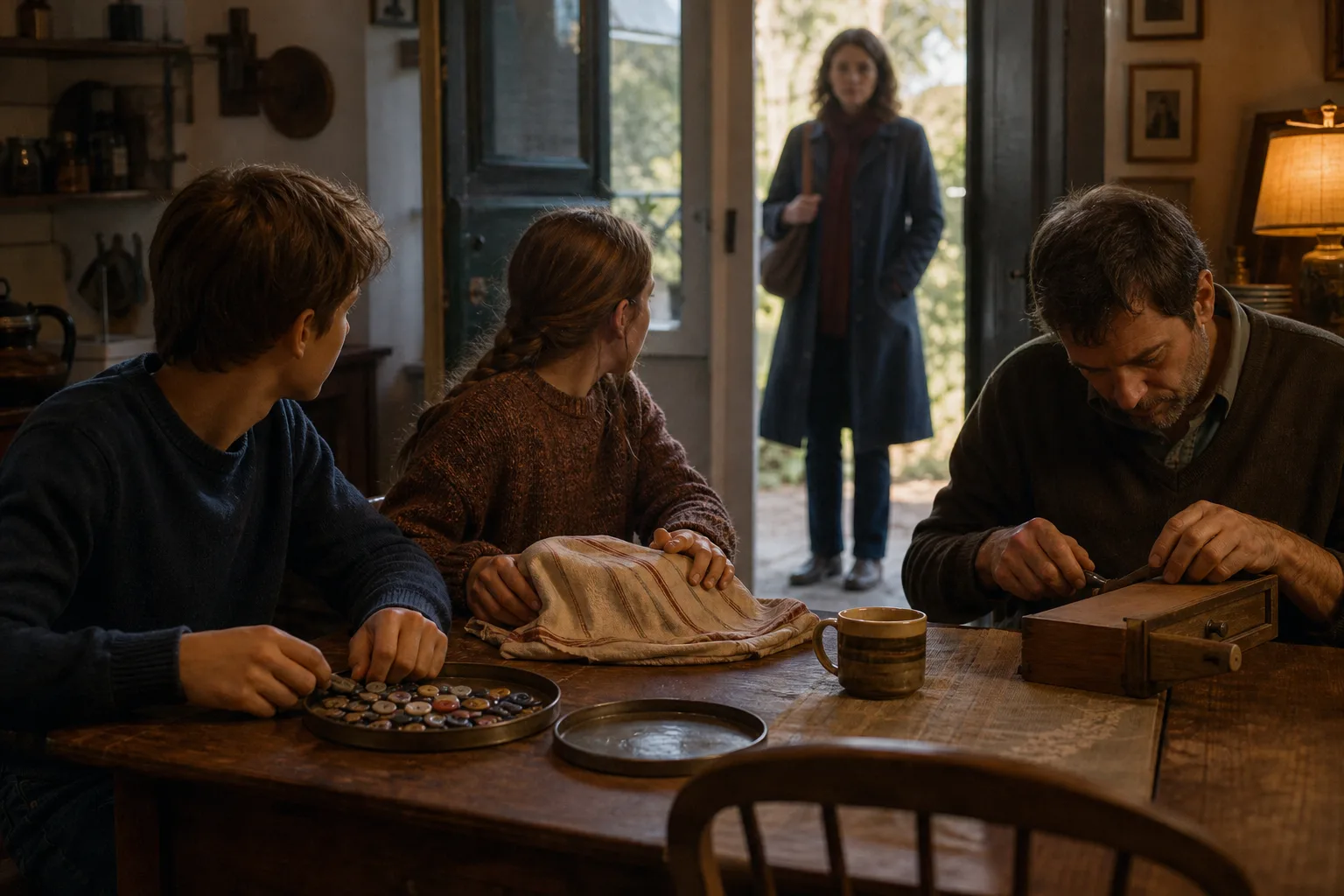
A scene that changes when someone enters does not need a dramatic announcement; it needs a room that feels different afterwards. Start with what the people inside are doing, then let the arrival disturb a pattern the reader can see.
The shift might be a conversation that stops, a chair left unoffered or a character who suddenly makes room on the table. These actions let readers infer what the newcomer means before anyone explains it. The craft lies in choosing a change that matters, then giving it space to register.
Give the room a pattern before the arrival
Before someone enters, establish a small, legible arrangement: who is speaking, where attention rests and what the characters are doing with their hands. A scene does not need a full inventory of the room. One or two details can show how its occupants have settled into the moment.
Perhaps two siblings sort a tin of buttons at the kitchen table while their father repairs a loose drawer. The clink of buttons, a shared joke and the father’s repeated tug at the drawer make a quiet rhythm. The reader can recognise that rhythm when a knock interrupts it.
Choose details that can change meaning after the entrance. A half-filled cup may be ordinary until someone hides it; a chair may be spare until one character pulls it close. Give each detail a job in the scene rather than pausing to decorate the room.
Let the newcomer alter a visible action
When the person arrives, make the first response physical and specific. Someone can turn a photograph face down, stop counting, shift a bag off the only empty chair or continue a task with conspicuous care. Such movements reveal attention without requiring an explanation of everyone’s feelings.
Use the first reaction that best exposes the relationship. A character who greets the visitor warmly but keeps one hand on a closed notebook may be welcoming and guarded at once. Another might make no move at all, leaving the silence for the reader to interpret.
Imagine a brother and sister dividing the last buttons from their grandmother’s sewing tin. Their aunt knocks; the sister slides the tin beneath a folded tea towel, and the brother carries on sorting as though nothing happened. The expected observable effect is a new question in the room: why did the sister hide the tin, and why did her brother let her?
Use the room to show who has permission
Where the newcomer goes can reveal the room’s social rules. Do they take a seat without asking, wait at the threshold, or walk straight to the kettle? The other characters’ responses show whether that familiarity is welcome, expected or contested.
Furniture can help make the boundary concrete. A narrow doorway, a chair angled towards the table or a coat placed over someone else’s usual seat may carry more force than a paragraph explaining status. Keep the detail tied to an action: the visitor waits while a character decides whether to move.
Notice who controls ordinary choices. One person might pour the tea, offer a chair or answer the newcomer’s question for someone else. The arrival can shift that control without changing the room’s layout at all.
Control what the newcomer knows
Not every arrival should trigger the same kind of suspense. Decide what the newcomer knows, what the people inside know and what the reader can currently infer. A visitor who misunderstands a tense silence creates one kind of scene; a visitor who notices it creates another.
Withhold information through selective attention, not vagueness. If a character closes a drawer as the visitor enters, show the hand on the handle and the visitor’s glance towards it. The reader may not know what is inside, but can follow the moment clearly.
Dialogue can sharpen the difference between what is said and what is signalled. A cheerful greeting followed by an untouched cup may suggest reluctance. Keep the spoken line plain enough that the action carries the contradiction.
How do you make the entrance feel earned?
Should the arrival interrupt dialogue?
It can, but the interruption should change what the characters can say or do. Let a sentence break at a revealing point, then show who tries to resume it and who lets it drop.
How much should the reader know about the newcomer?
Give enough information to make their actions readable: a name, a familiar habit or a clear relationship may be sufficient. Hold back background that does not affect the room’s immediate response.
Can the newcomer be silent?
Yes. A silent arrival can exert pressure through where they stand, what they touch and whether anyone makes space for them. Make sure the other characters respond in ways the reader can observe.
What if the room does not visibly change?
Let the lack of change become the signal: everyone carries on, but one person repeats a task or avoids looking up. The contrast between routine and strain can make the arrival feel sharper than an outburst.
Shape the scene around a before and after
To keep a compact scene focused, give it a simple progression: establish the room’s pattern, bring the newcomer across its boundary, show the first response, then end on a detail altered by the arrival. That final detail can be small; it only needs to make the earlier moment look different.
Read the scene while tracking what each character does, not only what they say. If the arrival produces no change in attention, movement, speech or access to the room, the scene may need a more consequential entrance. If every character reacts in the same way, give them distinct reasons to respond.
Keep the explanation for later unless the scene itself needs it. A hand that stays on a drawer, a chair left empty or a conversation that never resumes can hold tension without a verdict. When you revise a scene that changes when someone enters, check that the room’s first pattern is clear and that one concrete action makes its new pattern visible.